
Asian stock markets mostly declined on Monday while oil prices surged after U.S. President Donald Trump warned Iran that “the clock is ticking” as negotiations aimed at permanently ending the Iran conflict showed little progress. Investor concerns over escalating tensions in the Middle East and disruptions to global energy supplies weighed heavily on financial markets across the region, while U.S. stock futures also pointed lower.
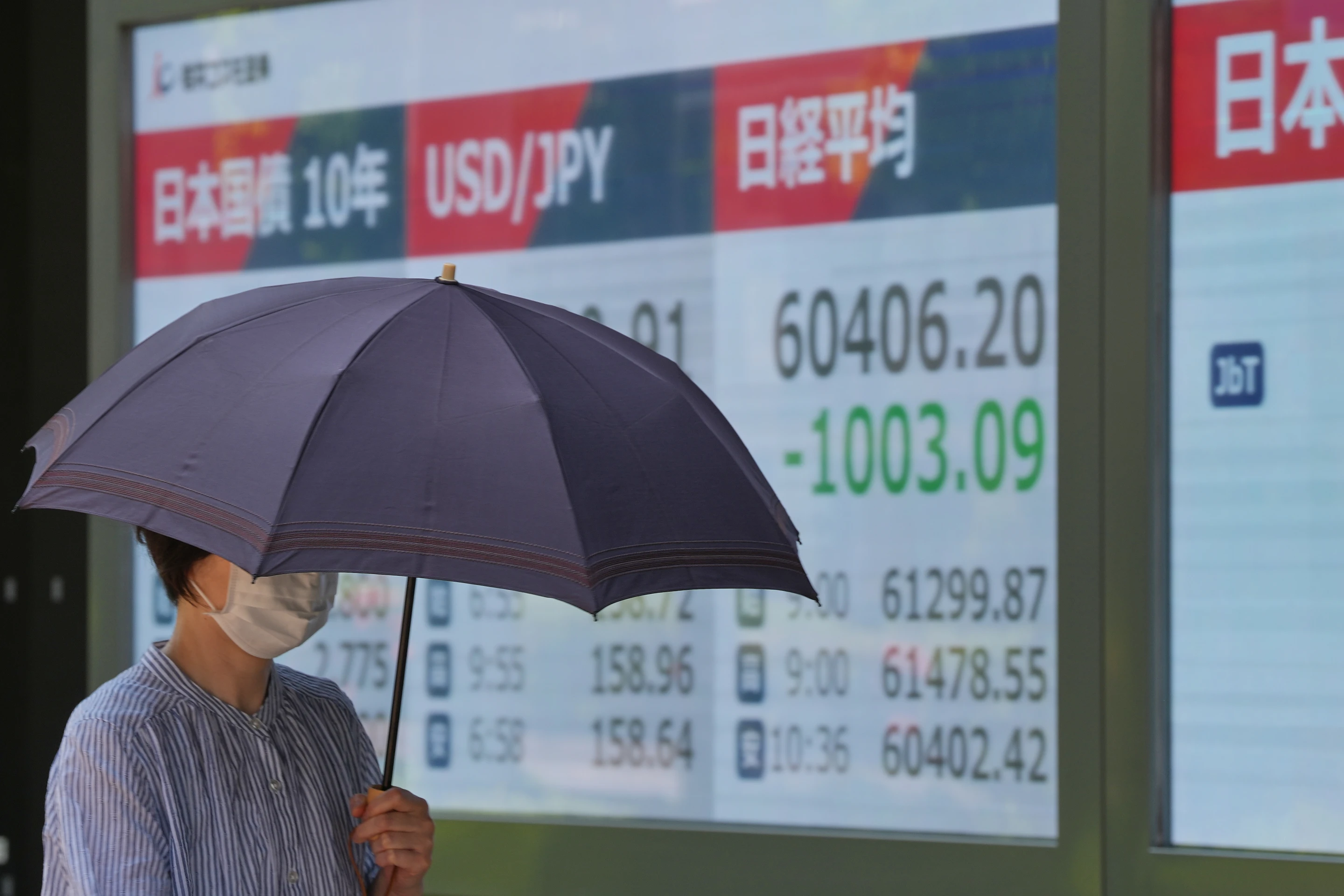
Japan and South Korea saw further pullbacks after recent record highs. Nikkei 225 dropped 0.9% to 60,843.09, led by declines in technology shares after the index hit all-time intraday highs above 63,000 last week. Meanwhile, South Korea’s KOSPI initially traded lower before rebounding to close 0.9% higher at 7,558.50. The index had crossed the 8,000-point mark on Friday, fueled by strong demand for AI-related technology stocks, though profit-taking later pulled prices down.
Elsewhere in Asia, Hong Kong’s Hang Seng Index fell 1.6%, while China’s Shanghai Composite Index slipped 0.1% after weaker-than-expected Chinese retail sales data for April added to concerns about slowing consumer demand. Australia’s S&P/ASX 200 lost 1.4%, Taiwan’s Taiex declined 1.1%, and India’s Sensex dropped 0.6%.
Oil prices climbed sharply as fears grew that the ongoing Iran conflict could further disrupt global energy flows, particularly through the strategically important Strait of Hormuz. Brent crude, the international benchmark, rose 1.9% to $111.31 per barrel, while U.S. benchmark crude gained 2.3% to $107.83 per barrel. Oil prices were trading near $70 per barrel before the conflict escalated earlier this year.
The market reaction intensified after Trump issued a warning to Tehran following a call with Israeli Prime Minister Benjamin Netanyahu. Investors also reacted to reports of a drone strike over the weekend targeting a nuclear power plant in the United Arab Emirates, raising fears of broader regional escalation.
Analysts said uncertainty surrounding the Strait of Hormuz remains a major concern for traders. Although shipping activity around the strait has increased slightly in recent days, the route remains largely restricted, and the United States has maintained a naval blockade on Iranian ports since last month. ING commodities strategists Warren Patterson and Ewa Manthey warned that “re-escalation risks are increasing” and that conditions in the region could deteriorate rapidly.
Markets were also disappointed by the lack of concrete progress following last week’s summit in Beijing between Trump and Chinese President Xi Jinping. While both governments reportedly agreed that the Strait of Hormuz must remain open, there has been little indication that China will play a direct role in mediating peace negotiations with Iran despite Washington’s hopes that Beijing could use its economic ties with Tehran to ease tensions.
Rising energy prices and geopolitical uncertainty also pushed bond yields higher. Japan’s 10-year government bond yield climbed to 2.8%, its highest level since the late 1990s, reflecting expectations of rising inflation and continued interest rate increases by the Bank of Japan. In the United States, the 10-year Treasury yield rose to around 4.63%, significantly above levels seen before the Iran conflict intensified.
Wall Street also weakened at the end of last week. The S&P 500 fell 1.2% from its previous record high, while the Dow Jones Industrial Average lost 1.1% and the Nasdaq Composite dropped 1.5%, led by declines in technology shares. Currency markets saw the U.S. dollar strengthen against the Japanese yen, while the euro traded slightly higher against the dollar.