
What to know
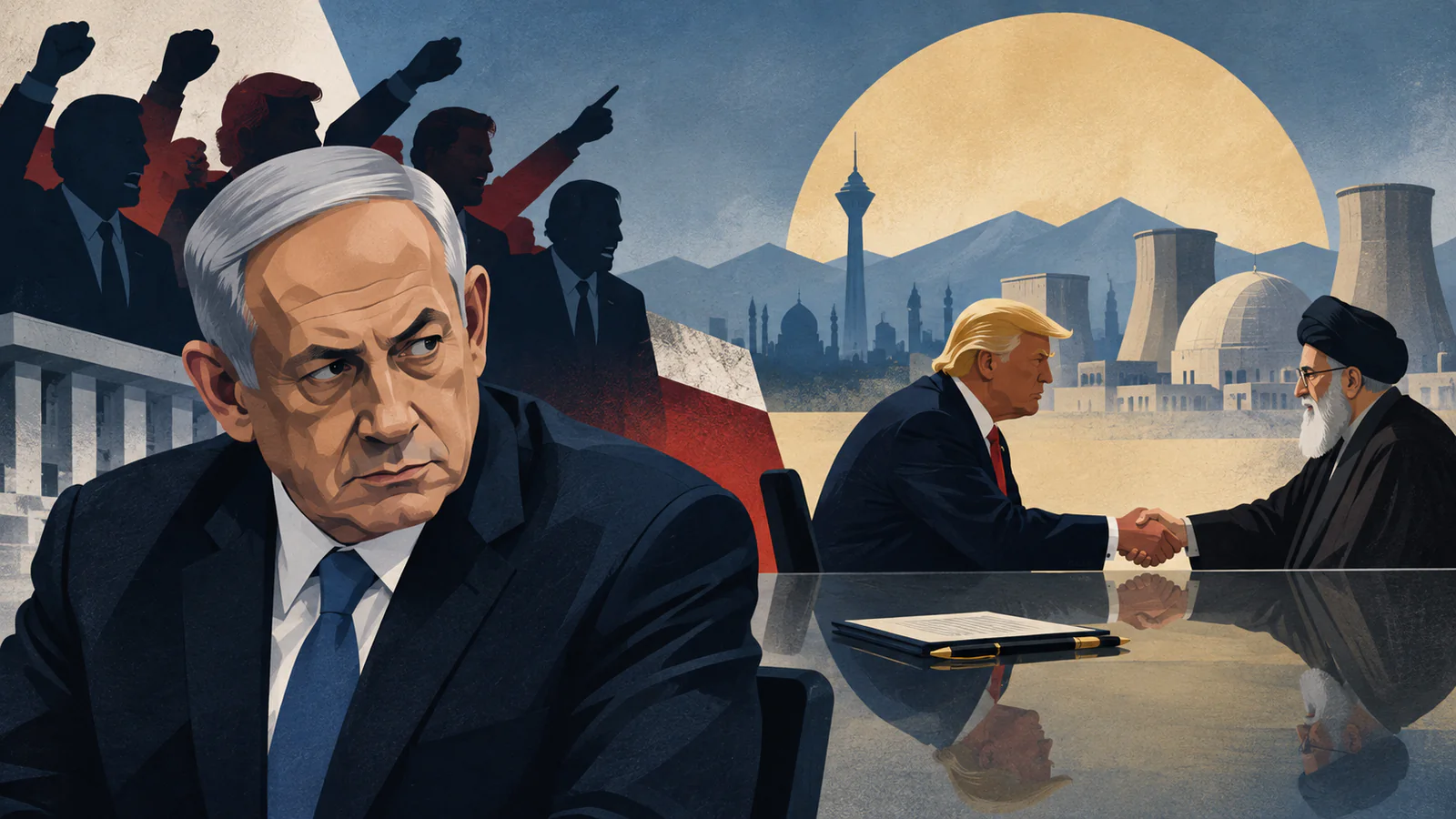
Tensions have surged between Washington and Jerusalem as Israeli Prime Minister Benjamin Netanyahu faces severe domestic and coalition pushback over reports that Donald Trump is nearing an unexpected agreement with Iran.
Further reading and standardsIsraeli concern and frustration are mounting after the Donald Trump administration seemed to be headed toward a possible deal with Iran after months of conflict. The deal, which is said to include reopening the Strait of Hormuz and alleviating tensions in the region, many Israeli political figures feel does not go far enough to tackle Iran’s broader military ambitions and nuclear capabilities. Israeli officials and commentators fear the agreement could leave Iran with fewer restrictions than previous international agreements while allowing Tehran to recover politically after months of war.
The conflict began earlier in the year with joint US-Israeli military operations against Iran. At the time, many supporters of Benjamin Netanyahu viewed the campaign as a defining strategic victory. But as the negotiations progressed and the discussion about a ceasefire widened, the criticism in Israel grew louder. Some said Israel had been sidelined from the negotiations, even though it was deeply involved in the military campaign. Reports indicated that Trump continued diplomatic efforts even as Israeli leaders pushed for tougher measures against Iran and Hezbollah.
The shape of the emerging deal raised fears that Iran might end up retaining its regional influence while gaining sanctions relief and economic recovery. Israeli critics warned that if Iran eventually obtained nuclear weapons capability, responsibility would fall on Netanyahu’s strategy and his reliance on Trump’s administration. Public debate inside Israel also reflected growing concern that the war had failed to achieve its major objectives, including weakening Iran’s regime or eliminating its regional influence.
Right-Wing Coalition Ultimatum: Threatening Collapse Over US Concessions
Prime Minister Benjamin Netanyahu is facing increasing political pressure as criticism grows over both the Iran negotiations and instability within his governing coalition. Netanyahu privately expressed frustration that he was unable to shape Trump’s Iran policies despite repeated conversations with the US president, and Israeli officials felt excluded from negotiations and concerned that Washington’s focus was shifting away from directly confronting Iran’s military infrastructure and toward regional stabilization, sources say.
Meanwhile, Netanyahu’s own political situation has become more precarious, with old tensions with ultra-Orthodox coalition partners over military service exemptions threatening the stability of his government. Disagreements over draft exemptions and public displeasure over unequal military obligations have put Netanyahu in a difficult political position ahead of a potential early election. Reports from Israel suggested lawmakers had already advanced legislation that could dissolve parliament and trigger new elections sooner than expected.
Critics argued that Netanyahu’s close alignment with Trump had weakened Israel’s influence rather than strengthening it. Some opposition figures claimed the government failed to secure meaningful guarantees regarding Iran’s missile programs and regional proxy groups. Others warned that Israel was becoming increasingly isolated internationally while domestic dissatisfaction over security and political leadership continued to grow. Analysts also pointed to growing uncertainty over Netanyahu’s ability to maintain support inside both his coalition and the broader Israeli public as military tensions persisted across the region.
Knesset Opposition Seizes on Fractured Security Ties with Washington
Israeli opposition leader Yair Lapid strongly criticized the emerging US-Iran agreement, calling it harmful to Israel, the Middle East and even the Iranian people themselves. Lapid argued that the proposed framework failed to address central Israeli security concerns, especially Iran’s missile program and Tehran’s support for armed groups across the region. According to reports, the agreement focused mainly on uranium stockpiles, sanctions relief and maritime access while leaving several major disputes unresolved.
Lapid accused Netanyahu of failing to influence Washington and allowing the United States to negotiate without meaningful Israeli involvement. He stated that Israel’s leadership had become too dependent on Trump and had lost leverage during one of the region’s most critical diplomatic moments. Opposition leaders argued that while Netanyahu presented the military campaign against Iran as a historic achievement, the eventual diplomatic outcome appeared to leave Israel with few strategic gains.
Political opposition inside Israel has also become more organized ahead of expected elections. Lapid joined forces with former Prime Minister Naftali Bennett in an attempt to challenge Netanyahu’s continued leadership. Their alliance focused heavily on criticism of Netanyahu’s handling of the Iran conflict, his relationship with Trump and broader concerns about governance and national security. The opposition argued that Israel needed a new direction as public dissatisfaction increased over war fatigue, economic strain and fears that the country was becoming increasingly isolated internationally.
Geopolitical Dilemma: Tehran Sanctions Relief vs Jerusalem's Red Lines
Ongoing discussions have not resolved significant differences between the United States, Iran, and Israel. Iran kept demanding sanctions relief and assurances against further attacks, while the United States held out for restrictions on Tehran’s nuclear work and broader regional concessions. Israel remained skeptical of the talks, warning that Iran’s military capabilities and backing for allied armed groups posed long-term threats to regional stability.
Neither officer has been publicly named pending the Military tensions persisted amid the diplomatic discussions. Reports said the United States carried out more strikes on targets in southern Iran after accusing Tehran of threatening American forces. Netanyahu also vowed to step up action against Hezbollah in Lebanon, suggesting that Israel would maintain military pressure even as negotiations continue. The developments stoked fears that cease-fire agreements could unravel if the talks fail to produce a lasting deal.
The future of the negotiations remains uncertain as competing objectives continue to divide all sides involved. Trump publicly suggested optimism about reaching an agreement, while Iran insisted that major obstacles still remained. Israeli officials and opposition figures continued warning that any deal which failed to fully dismantle Iran’s military and nuclear ambitions would only deepen instability across the Middle East. As diplomatic discussions continue alongside military operations, both Israel’s internal political future and the broader regional balance remain highly uncertain.
Further reading
Use these official collections to explore the subject and confirm time-sensitive figures against the dated record.