
What to know
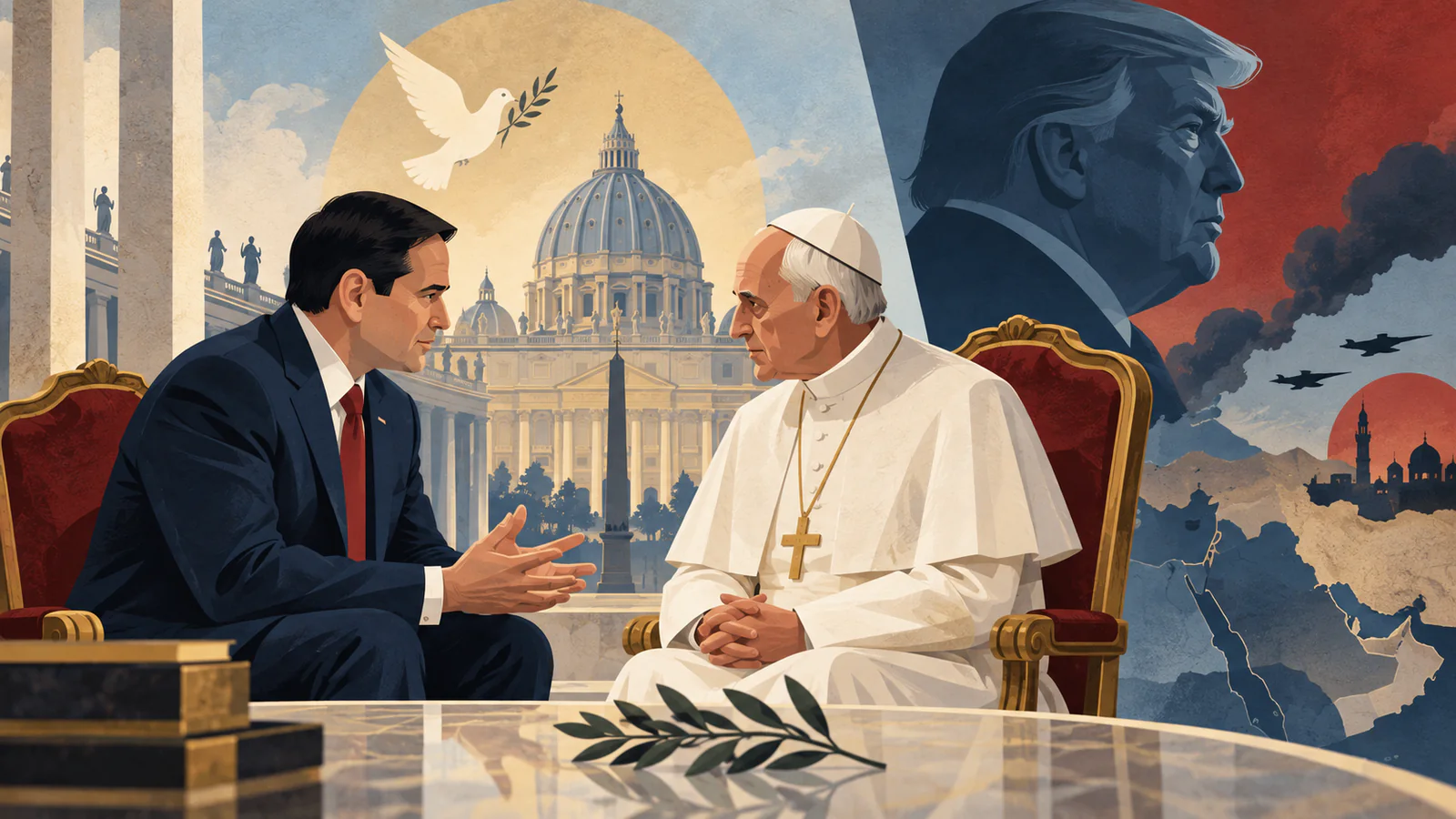
Secretary of State Marco Rubio met with Pope Leo XIV and senior Vatican diplomats in Rome, attempting to smooth over severe geopolitical fractures sparked by Donald Trump's confrontation with Tehran.
Further reading and standardsMarco Rubio traveled to the Vatican this week for high-level meetings with Pope Leo XIV and senior church officials as tensions continued growing between the pope and Donald Trump over the war involving Iran. The visit was widely seen as an attempt to calm an increasingly public and politically sensitive dispute between Washington and the Vatican.
Rubio, who is Catholic, met with Vatican Secretary of State Cardinal Pietro Parolin in addition to his planned audience with Pope Leo. Officials said the discussions focused on the Iran conflict, the broader Middle East situation, migration issues, and diplomatic cooperation between the United States and the Holy See.
The meetings came after Trump repeatedly criticized Pope Leo for comments calling for peace negotiations and restraint in the Iran conflict. Trump accused the pope of being weak on terrorism and crime and suggested the Vatican was showing too much sympathy toward Iran.
Rubio’s trip also included meetings in Italy with Giorgia Meloni and other officials as the United States continued trying to build international support around Middle East security concerns and negotiations involving Iran.
The Holy See as an Outspoken Moral Critic of Middle Eastern Escalation
In recent weeks, Pope Leo XIV has repeatedly spoken out against military escalation involving Iran and urged world leaders to pursue diplomacy instead of further conflict.
The pope condemned what he described as the “delusion of omnipotence” driving the war and warned that continued violence risked destabilizing the Middle East even further while causing enormous civilian suffering. During remarks following a trip to Africa, he called for a new “culture of peace” built around negotiation and humanitarian responsibility rather than military force.
He also urged the United States and Iran to return to direct diplomatic talks, arguing that long-term stability could not be achieved through escalation alone.
Those comments triggered a fierce reaction from Trump and several conservative allies in the United States, who argued the pope was unfairly criticizing American and Israeli actions while not speaking strongly enough against Iran.
What began as a disagreement over foreign policy has gradually evolved into one of the most politically charged confrontations between a U.S. president and the Vatican in years.
Rubio’s Tightrope Walk: Reconciling Faith, Statecraft, and White House Directives
Rubio has increasingly found himself balancing two difficult roles: defending U.S. foreign policy while also trying to contain diplomatic fallout with allies and international institutions. Analysts described the Vatican trip as both highly sensitive and strategically important.
According to officials, Rubio emphasized issues such as reopening secure shipping through the Strait of Hormuz, limiting Iran’s nuclear ambitions, and reducing instability across the region.
Italian political observers and media reports suggested part of the mission was also aimed at repairing relations damaged by Trump’s repeated attacks on Pope Leo. Some analysts believe Washington increasingly recognizes the Vatican’s growing moral influence internationally, especially on issues involving war, refugees, and humanitarian crises.
The talks highlighted the continuing role of the Vatican as a diplomatic player able to influence global debates even when other major governments are taking a different position.
Presidential Rhetoric and the Escalation of Diplomatic Tensions with Rome
The tension between Trump and Pope Leo intensified after weeks of increasingly sharp criticism from the president. Trump accused the pope of promoting left-wing politics and claimed he was too weak in confronting terrorism and global violence.
The dispute became even more controversial after Trump shared — and later deleted — an AI-generated image portraying himself with Christ-like imagery. The post drew backlash not only from critics but also from some conservative commentators and Catholic figures who considered it inappropriate.
Pope Leo largely avoided responding directly to Trump’s personal attacks. Instead, he continued returning to themes of peace, diplomacy, and moral responsibility. At one point, he publicly stated that debating Trump personally was “not in my interest at all” and said he intended to continue preaching peace regardless of political criticism.
The conflict has drawn even more attention because Pope Leo is the first American-born pope in history, creating an unusually direct overlap between Vatican leadership and U.S. domestic politics.
Faith and Realpolitik: The Global Impact of Catholic Moral Diplomacy
The disagreement now reflects something larger than a personal clash between two powerful figures. It has fed into a wider international debate on war, diplomacy, nationalism, religion and moral leadership in an age of growing global instability.
Pope Leo has increasingly positioned himself as a global advocate for peace negotiations and humanitarian protection in conflict zones. During recent international visits and outreach efforts connected to crises in Africa and the Middle East, he repeatedly warned against nationalism, authoritarianism, corruption, and the normalization of war.
His message has resonated strongly in many countries worried about escalation and civilian suffering tied to the Iran conflict. At the same time, critics — especially among Trump supporters and conservative commentators in the United States — argue the pope’s statements risk undermining Western security interests and military deterrence.
Further reading
Use these official collections to explore the subject and confirm time-sensitive figures against the dated record.