
What to know
Eli Lilly secured official approval from China's National Medical Products Administration for its innovative monoclonal antibody therapy, offering a crucial new clinical treatment for millions suffering from ulcerative colitis and Crohn's disease.
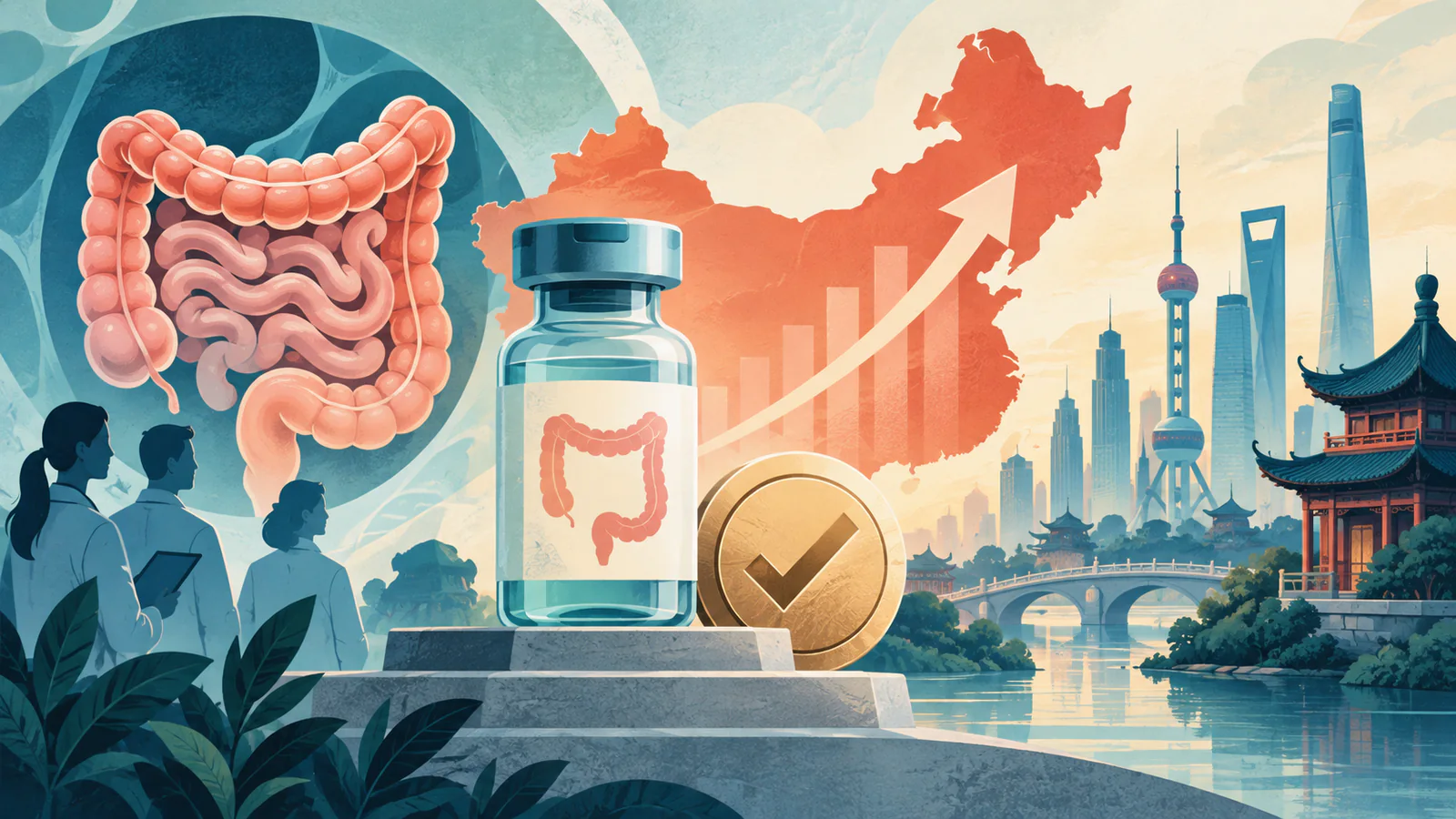
Further reading and standardsBEIJING — Global pharmaceutical heavyweight Eli Lilly and Company (NYSE: LLY) achieved a major regulatory milestone in East Asia after China's National Medical Products Administration (NMPA) formally approved its targeted biologic therapy for the treatment of moderate-to-severe inflammatory bowel disease (IBD). The landmark approval allows Lilly to introduce its advanced interleukin-23 (IL-23) antagonist to Chinese gastroenterologists and patients, dramatically expanding its commercial footprint in the world's second-largest healthcare market.
What Happened: Chinese NMPA Clears Lilly's Next-Generation Biologic
The regulatory authorization follows extensive global Phase 3 clinical trials, including Asian regional cohort studies, that demonstrated robust mucosal healing and durable clinical remission:
The therapy, mirikizumab (Omvoh), represents the first IL-23p19 subunit-targeted monoclonal antibody approved in China specifically indicated for adults with active ulcerative colitis who failed or were intolerant to conventional corticosteroids or anti-TNF biologics. In multi-year clinical trials, more than 50% of patients achieved complete bowel urgency relief and histological remission at 52 weeks.
Epidemiological Shift: The Rising Surge of IBD Across Urban China
The approval addresses an urgent, fast-growing public health priority across Chinese metropolitan centers:
- Rapid Diagnosis Influx: Traditionally considered a Western disease, inflammatory bowel disease prevalence in China has quadrupled over the last 20 years, with clinical cases now exceeding 1.5 million.
- Urbanization and Diet: Gastroenterologists attribute the surge to rapid dietary Westernization, increased processed food consumption, antibiotic overuse, and alterations in the human gut microbiome among young working professionals.
- Unmet Clinical Need: Older biologic treatments often trigger antibody resistance over time, leaving significant patient populations in urgent need of novel therapeutic mechanisms to avoid invasive colorectal surgeries.
Commercial Strategy: National Reimbursement and Hospital Access
With marketing approval secured, Eli Lilly is executing a multi-tiered commercial rollout to ensure broad patient access across Tier 1 and Tier 2 cities:
Lilly's China commercialization division is preparing to submit mirikizumab for inclusion in China's National Reimbursement Drug List (NRDL) during the upcoming annual price negotiation cycle. Inclusion in the NRDL typically requires steep upfront price concessions but guarantees immediate formulary listing across thousands of state-run Class 3A tertiary hospitals nationwide.
What to Watch Next: Crohn's Indication and Autoimmune Pipeline
Lilly is aggressively expanding its immunology portfolio to diversify beyond its blockbuster GLP-1 weight-loss and diabetes treatments:
The pharmaceutical giant is actively conducting supplemental clinical trials in China to extend mirikizumab's approval to pediatric ulcerative colitis and moderate-to-severe Crohn's disease. Analysts project that autoimmune biologics could generate over $800 million in annual regional revenue for Lilly in China by 2028.
Further reading
Use these official collections to explore the subject and confirm time-sensitive figures against the dated record.