
What to know
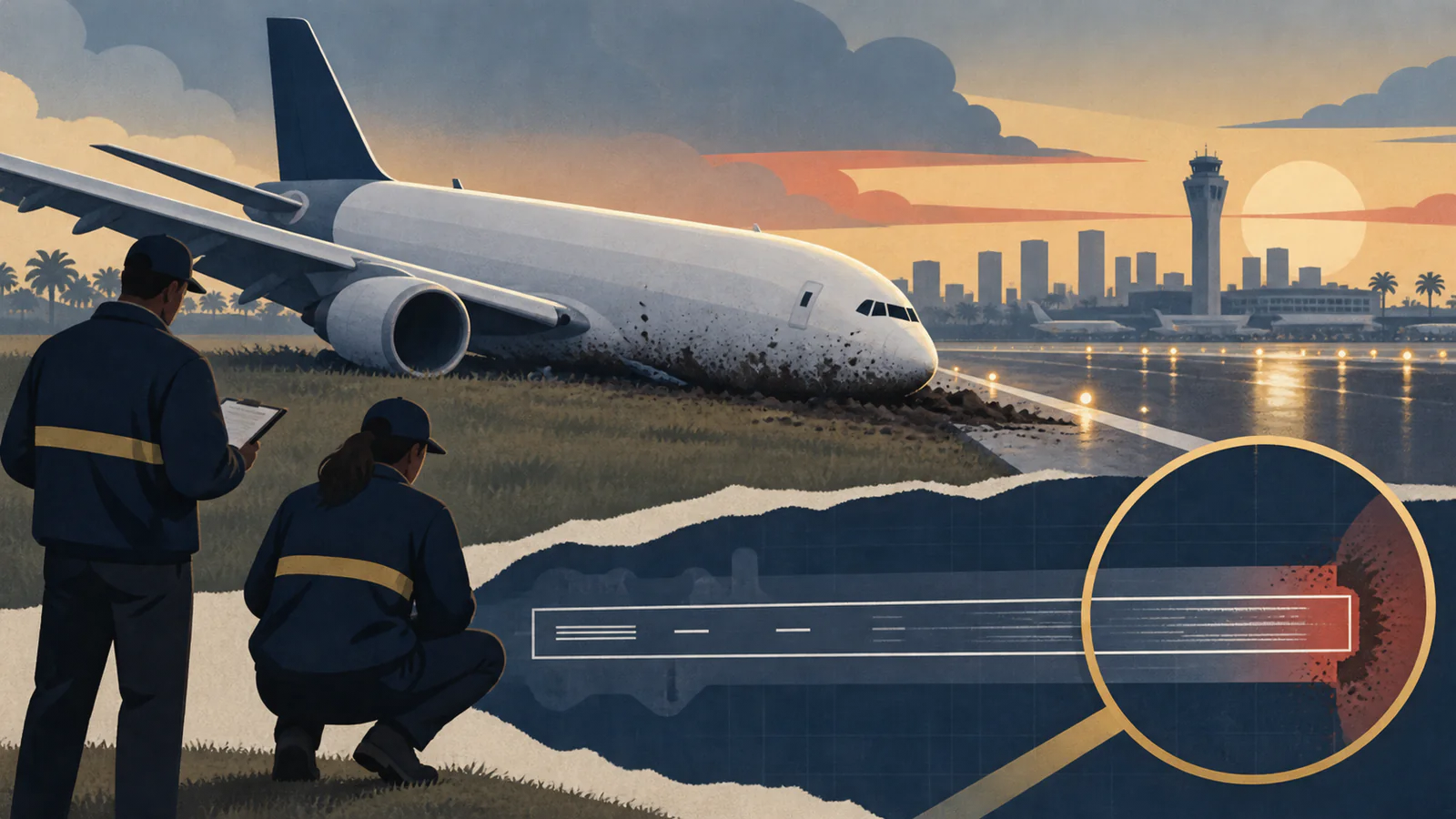
Five people were killed and five were injured after 21 Air Flight 7598, a Boeing 767 carrying cargo for Amazon Air, overran Runway 30 at Miami International Airport. The NTSB's preliminary recorder data describes an unstable landing and attempted go-around, but no probable cause has been determined.
Further reading and standardsThe accident occurred on September 6, 2026, as 21 Air Flight 7598 arrived from San Juan, Puerto Rico. The Boeing 767-33A overran the end of Runway 30, crossed the airport perimeter and struck vehicles outside the airfield. Miami-Dade officials confirmed five deaths and five injuries. The flight crew survived; the fatalities were among people on the ground.
What happened
The National Transportation Safety Board identifies the operation as a Part 121 cargo flight run by 21 Air LLC for Amazon Air. That distinction matters: Amazon was the customer whose cargo network used the flight, while 21 Air was the certificated carrier operating the aircraft.
Local authorities initially focused on rescue, securing the accident area and restoring airport operations. Their public statement confirmed the casualty count but did not assign a cause. Cause determinations are the responsibility of the NTSB and generally come only after investigators analyze records, equipment, operations and human factors.
What the recorders show
The NTSB recovered the cockpit voice recorder and flight data recorder and successfully read both devices. Its September 9 update says the crew received repeated “sink rate” and “too low terrain” alerts. Recorder data indicates the aircraft's nose and right main landing gear touched down at 158 knots, followed by the left main gear at 134 knots.
The preliminary sequence also shows a late go-around attempt. Thrust increased after touchdown, then returned to idle as the brakes were reapplied. The aircraft left the paved surface moments later. The NTSB said the recorded data showed no deployment of speed brakes or thrust reversers. These details describe the sequence; they do not, by themselves, establish why it occurred.
What remains unknown
The NTSB has not issued a probable-cause finding. Assertions about a landing-gear failure, hydraulic malfunction, maintenance lapse or crew error would therefore be premature unless investigators later support them. The agency has cautioned that its recorder timeline is preliminary and subject to change as the cockpit recording is synchronized with other evidence.
The operator and response
21 Air said it was cooperating with the NTSB and supporting people affected by the accident. Amazon subsequently paused operations with the carrier while the investigation continued. Readers following the case should rely on the NTSB investigation page and docket for new evidence rather than treating early accounts as final findings.
Further reading
Use these official collections to explore the subject and confirm time-sensitive figures against the dated record.