
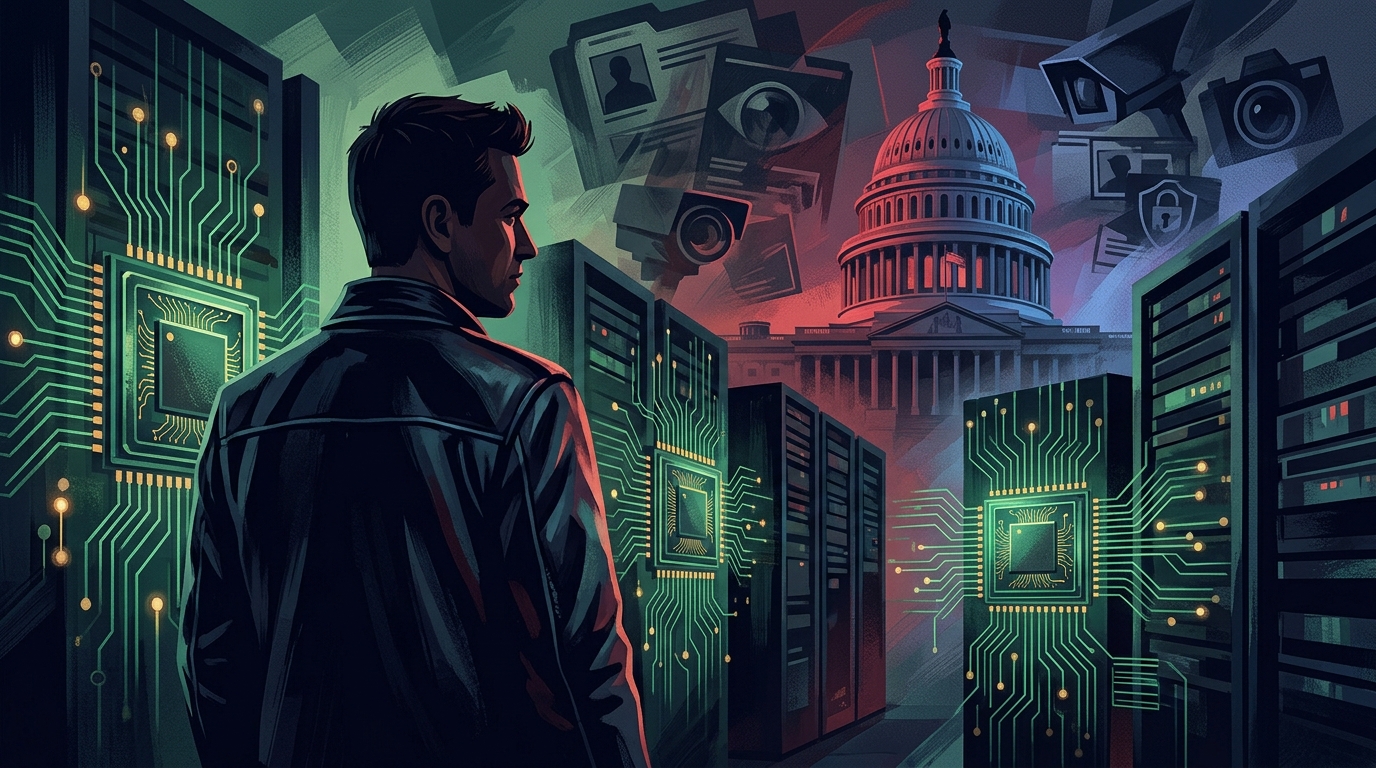

WASHINGTON & SANTA CLARA, Calif. — President Donald Trump confirmed that the Federal Bureau of Investigation is examining Nvidia CEO Jensen Huang’s past affair with a woman identified by U.S. intelligence agencies as an alleged Chinese government operative, while publicly backing the semiconductor chief and stating he believes Huang had no knowledge of any espionage connection.
Speaking to reporters at the White House, Trump said federal counterintelligence officials were "looking into it" following disclosures that the chief executive of the world’s most valuable chipmaker had been romantically involved with a former foreign tech executive assessed by U.S. officials to have gathered information for Beijing.
"I spoke to Jensen, and he had absolutely no idea that the person in question was a spy," Trump told reporters, adding that he considers Huang "a great guy" who has done an extraordinary job building American artificial intelligence infrastructure and expects him to be "in good shape."
Counterintelligence Assessment and Megaspeed International Ties
The controversy erupted after investigative reporting by The New York Times and the Financial Times revealed that U.S. intelligence agencies had concluded a woman named Alice Huang—also known as Huang Le and unrelated to the Nvidia founder—acted as an intelligence asset for China’s Ministry of State Security.
According to those reports, Alice Huang previously served as an executive at Megaspeed International, a Singapore-headquartered data center company that purchased large volumes of advanced Nvidia processors. Federal officials had already been scrutinizing whether intermediaries in Southeast Asia were being used to divert or provide remote access to restricted high-performance AI chips in circumvention of U.S. export controls.
Intelligence analysts reportedly assessed that Alice Huang sought to cultivate relationships with prominent Silicon Valley executives to gain insight into U.S. semiconductor supply chains, corporate strategy, and Washington’s export-licensing deliberations.
Jensen Huang’s Apology and Nvidia Board’s Independent Review
Following the reports, Jensen Huang publicly acknowledged the past extramarital relationship and issued an apology to his wife, Lori, his family, and Nvidia’s employees, saying the relationship had ended after U.S. officials alerted him to their counterintelligence concerns.
Nvidia’s board of directors announced that a committee of independent directors had retained outside legal counsel to conduct a formal review of corporate security protocols, executive communications, and potential exposure of proprietary technology.
In a statement to shareholders, Nvidia emphasized that the board retains full confidence in Huang’s leadership and noted that preliminary reviews found no evidence that confidential chip architectures, source code, or national security information were shared or compromised.
Market Reaction and Capitol Hill Scrutiny Over AI Security
The disclosures rattled Wall Street, sending Nvidia shares lower as investors weighed governance risks surrounding the 63-year-old co-founder, who has led the Santa Clara company since 1993 and overseen its rise into the backbone of the global generative AI boom.
On Capitol Hill, lawmakers on congressional intelligence and China select committees called for classified briefings from the FBI and the Department of Commerce’s Bureau of Industry and Security. Several legislators argued that the episode underscores how aggressively foreign intelligence services target top American technology executives amid the U.S.-China race for artificial intelligence supremacy.
Chinese foreign ministry officials dismissed the espionage allegations as fabricated smears intended to justify tighter U.S. technology restrictions. Meanwhile, corporate governance analysts said the FBI’s counterintelligence review and Nvidia’s internal board inquiry will be closely watched by institutional investors to ensure executive security safeguards match the strategic sensitivity of Nvidia’s AI hardware.