
What to know
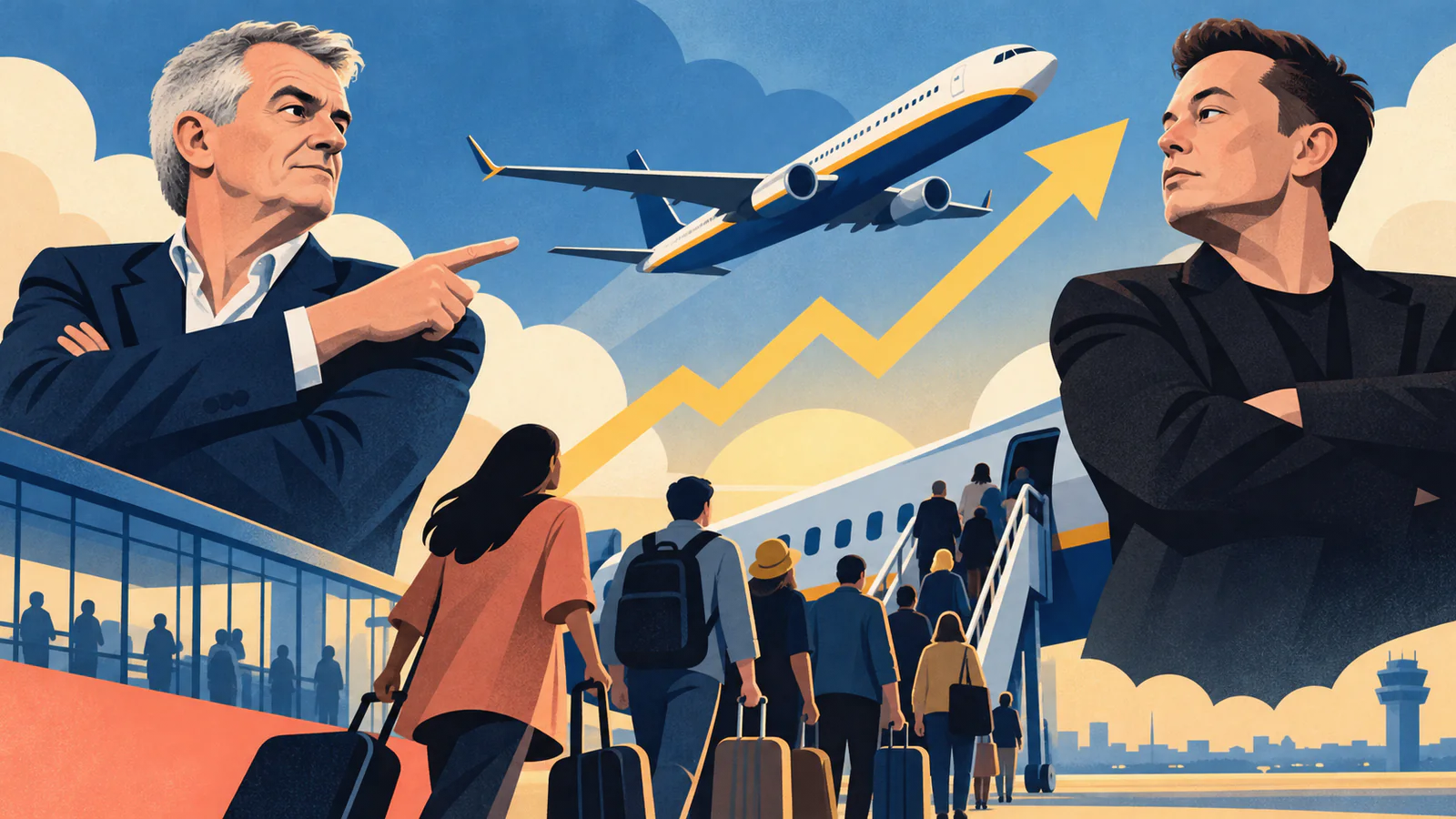
Ryanair reported a 22% increase in forward bookings after a public exchange between CEO Michael O'Leary and Elon Musk over Starlink Wi-Fi. The timing suggests publicity may have helped, but it does not establish that the dispute caused the increase.
Further reading and standardsDUBLIN & LONDON — Europe's largest budget carrier Ryanair Holdings plc (ISE: RYA) posted an unexpected 22% surge in seasonal forward passenger bookings on Tuesday, an influx of consumer demand that chief executive Michael O'Leary gleefully attributed to the viral publicity generated by his high-profile public dispute with tech billionaire Elon Musk. The feud erupted after O'Leary publicly dismissed Musk's Starlink satellite internet terminals as "ruinously heavy and economically unviable" for low-cost short-haul aviation, igniting a fiery social media clash that inadvertently turned into Ryanair's most lucrative marketing coup of 2026.
What Happened: How an In-Flight Wi-Fi Dispute Sparked a Booking Wave
The sparring between the outspoken Irish airline executive and the world's richest individual began when O'Leary addressed aviation analysts at a transport conference in Brussels.
Asked why Ryanair had not joined legacy carriers in installing satellite Wi-Fi antennas across its fleet of more than 500 Boeing 737 aircraft, O'Leary bluntly retorted that radome antennas increase aerodynamic drag, consume excess aviation kerosene, and require capital expenditures that low-fare travelers refuse to pay for. Musk quickly fired back on his social platform X, mocking Ryanair's legendary bare-bones service and jokingly offering to "buy Ryanair just to install Starlink and give passengers free legroom."
O'Leary seized the moment, holding a press briefing in Dublin where he displayed a mock oversized cardboard boarding pass for Musk and announced a flash "Billionaire Feud" seat sale with fares starting from €14.99 across European holiday destinations.
The Financial Logic: Why Ryanair Rejects In-Flight Connectivity
Beneath O'Leary's characteristic showmanship lies a calculating, ruthless operational discipline that has preserved Ryanair as the most profitable airline in Europe:
- Aerodynamic Drag and Fuel Burn: Engineering assessments indicate that external satellite radomes increase aircraft fuel consumption by 1.5% to 2%, adding over €75 million to Ryanair's annual fleet fuel expenditure.
- Turnaround Time Protection: Ryanair's operational model relies on strict 25-minute aircraft turnarounds at airport gates; servicing complex satellite communications hardware risks unscheduled maintenance delays.
- Passenger Route Dynamics: The average Ryanair flight duration is approximately one hour and fifteen minutes. Consumer surveys indicate travelers prioritize ultra-cheap tickets over streaming movies during short European hops.
Why It Matters: Record Passenger Volumes and Free Media Dominance
While legacy competitors spend hundreds of millions annually on corporate branding agencies, Ryanair converted an abrasive social media squabble into measurable commercial revenue.
Forward summer booking loads hit 94% across Mediterranean sun routes, while the carrier's mobile application ranked among the most downloaded travel apps in the United Kingdom, Germany, and Spain. Ryanair reported passenger numbers climbing toward 198 million annually, positioning the airline to deliver record operating margins despite broad European macroeconomic headwinds.
What to Watch Next: Fleet Deliveries and Airline Connectivity Wars
Aviation strategists will watch closely whether rival ultra-low-cost carriers like Wizz Air and easyJet attempt to differentiate by adopting next-generation phased-array antennas.
Meanwhile, O'Leary reaffirmed that Ryanair remains focused on taking delivery of its delayed Boeing 737 MAX 10 aircraft, reiterating: "Elon is welcome to buy a seat on Ryanair anytime, provided he pays the extra fee for his carry-on bag."
Further reading
Use these official collections to explore the subject and confirm time-sensitive figures against the dated record.