
What to know
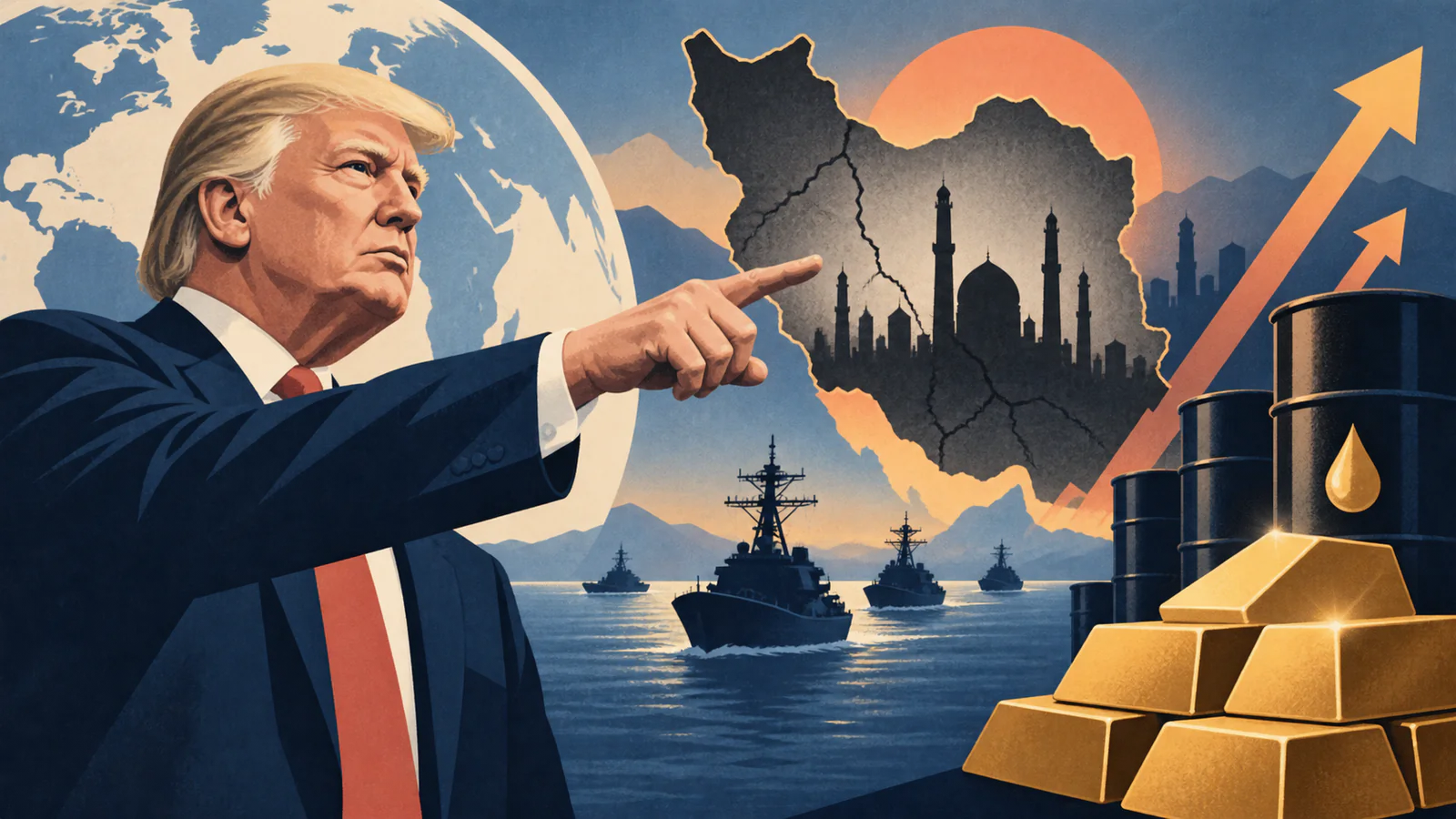
President Donald Trump said regime change in Iran would be the 'best thing' for regional and global security. The remarks added uncertainty to diplomacy and energy markets as U.S. forces remained on alert in the Persian Gulf.
Further reading and standardsWASHINGTON — In remarks that reverberated across global financial markets, energy exchanges, and diplomatic corridors on Monday, President Donald Trump declared that an outright regime change in the Islamic Republic of Iran would be the "absolute best thing that could ever happen to the Middle East and the world." Speaking during an impromptu press availability at the White House alongside defense officials, Trump pointed to escalating naval skirmishes in the Persian Gulf and ongoing domestic economic unrest within Tehran, asserting that decades of nuclear non-compliance and regional proxy warfare have demonstrated that permanent peace is incompatible with current Iranian clerical leadership.
What Happened: Escalating Rhetoric Amid Persian Gulf Stand-Off
Trump's blunt statement represents a dramatic departure from decades of carefully calibrated diplomatic ambiguity regarding regime stability in Tehran.
The comments arrived as the U.S. Navy Fifth Fleet deployed additional carrier strike group assets to the Strait of Hormuz following repeated drone encounters with Islamic Revolutionary Guard Corps (IRGC) fast-attack craft. When pressed by foreign policy correspondents whether the United States was actively seeking regime overthrow through covert operations or direct kinetic intervention, Trump responded: "I am not saying we have to do it militarily. But the people of Iran are brilliant and exhausted by economic ruin. A change at the top would be the best thing for peace, prosperity, and the entire globe."
Energy Markets Shake: Brent Crude and Gold Surge on Geopolitical Risk
Global commodities responded with instant volatility as energy traders factored in a heightened risk premium across Persian Gulf shipping lanes:
- Brent Crude Futures Spurt: Brent crude leaped 4.2% to trade above $89 per barrel on fears that retaliatory maritime actions could choke transit through the Strait of Hormuz, through which 20% of global petroleum passes daily.
- Safe-Haven Rally: Gold bullion surged past record highs near $5,600 as international sovereign funds hedged against broader escalation involving Israel and regional proxy groups.
- Maritime Insurance Surcharges: Lloyd's of London war-risk underwriters instituted immediate premium increases for commercial petroleum supertankers traversing the Persian Gulf.
International Reactions: European Allies Urge De-escalation as Tehran Blasts Remarks
The White House declaration triggered acute diplomatic friction across European and Middle Eastern capitals.
Diplomatic representatives from the United Kingdom, France, and the European Union urged immediate rhetorical restraint, expressing concern that overt calls for regime change could derail remaining International Atomic Energy Agency (IAEA) monitoring protocols and push Tehran to accelerate uranium enrichment past weapons-grade thresholds. Conversely, officials in Jerusalem commended Trump's clarity, reiterating that Iran's ballistic missile programs pose an existential threat to regional stability.
In Tehran, Iranian Foreign Ministry spokespersons condemned Trump's remarks as "reckless violations of international sovereignty and the UN Charter," warning that Iranian armed forces stand fully mobilized to retaliate decisively against any overt or covert aggression.
What to Watch Next: Congressional Debates and War Powers Inquiries
On Capitol Hill, congressional leaders demanded immediate classified briefings on U.S. rules of engagement in the Persian Gulf:
Lawmakers on the Senate Foreign Relations Committee emphasized that any military offensive directed at Iranian territory would require explicit War Powers Resolution authorization from Congress. As diplomatic emissaries from Oman and Qatar attempt back-channel mediation, energy analysts expect fuel prices to remain elevated until naval tensions in the Strait de-escalate.
Looking Ahead
Trump’s statement that regime change in Iran could be “the best thing” adds a new dimension to an already complex relationship. While it does not constitute a formal policy shift, the rhetoric alone has consequences, influencing perceptions, diplomatic calculations, and regional dynamics.
In the coming months, attention will focus on whether diplomatic channels remain open, how Iran responds to continued pressure, and whether military posturing gives way to renewed negotiations or further escalation. For now, Trump’s remarks underscore the enduring volatility of U.S.–Iran relations and the difficulty of resolving decades-long disputes through either diplomacy or force alone. As history has shown, the path forward will likely involve a mixture of negotiation, deterrence, and political signaling — with high stakes for regional stability, global security, and millions of lives affected by the outcome.