
What to know
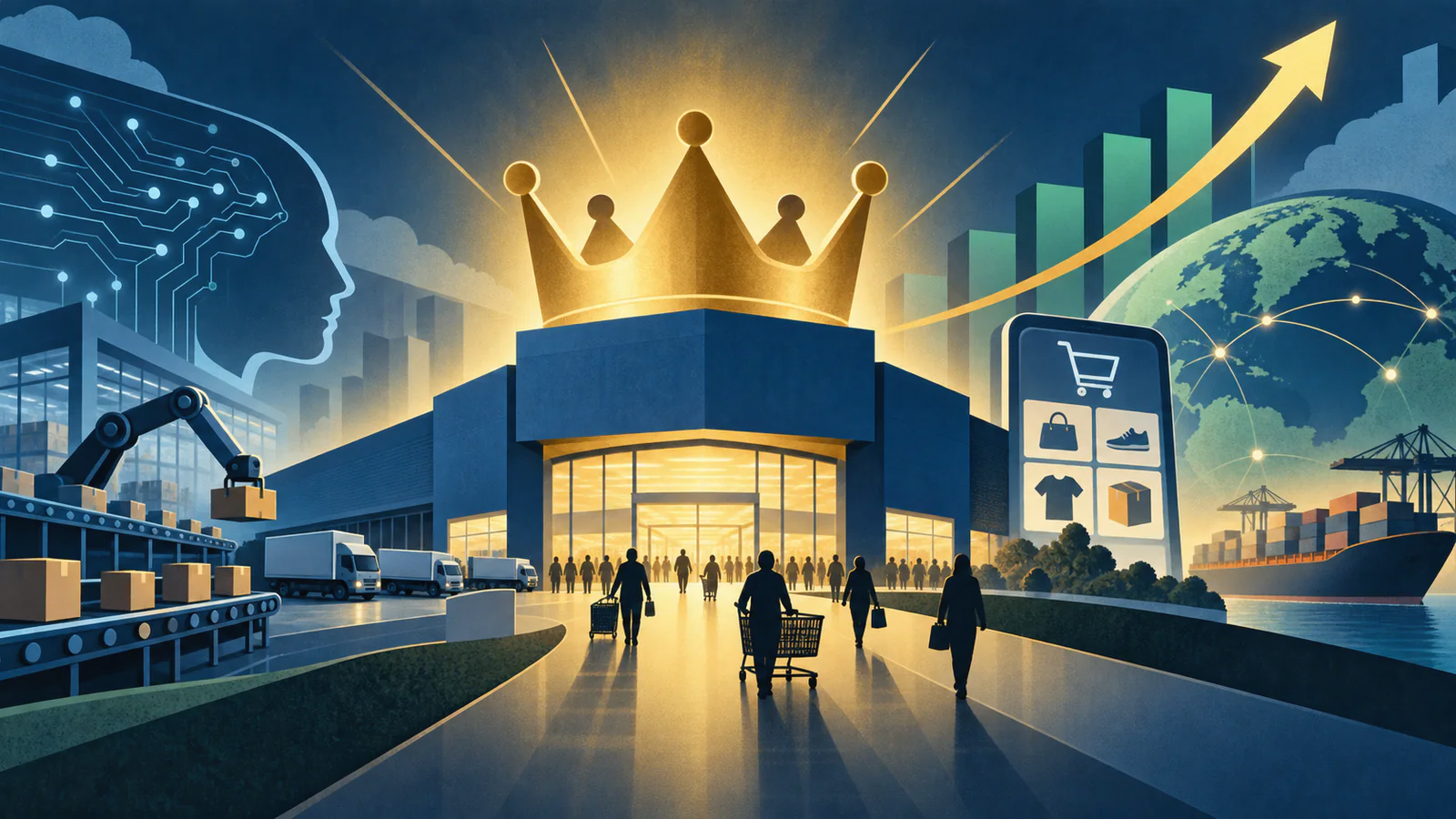
Walmart reached a $1 trillion market capitalization, becoming the first traditional retailer to cross that threshold as e-commerce, advertising and automation supported growth.
Further reading and standardsBENTONVILLE, Ark. — In a historic corporate milestone that reshapes the retail landscape, Walmart Inc. (NYSE: WMT) formally surpassed $1 trillion in market capitalization during Tuesday trading, becoming the first traditional brick-and-mortar retail giant in world history to enter the exclusive trillion-dollar valuation club alongside tech mega-caps Nvidia, Apple, Alphabet, Microsoft, and Amazon. The retailer's stock gained 2.1% to reach an all-time high of $126.80, propelled by fourth-quarter earnings, expanded use of AI in its supply chain, and favorable international trade developments.
What Happened: The Retail Revolution from Bentonville to Trillion-Dollar Elite
Founded in 1962 as a humble discount store in Rogers, Arkansas, Walmart's ascension into the $1 trillion ranks demonstrates the success of its multi-year digital transformation:
While critics once questioned whether traditional retailers could withstand Amazon's e-commerce onslaught, Walmart leveraged its unbeatable physical footprint of over 4,600 U.S. stores located within 10 miles of 90% of the American population to create an unrivaled omnichannel fulfillment and delivery network. Annual digital sales surpassed $100 billion, with store-fulfilled curbside pickup and same-day home delivery driving double-digit volume growth.
The Strategic Catalyst: U.S.-India Trade Deal and Supply Chain Diversification
A decisive catalyst behind Walmart's stock surge was the announcement by the White House of a comprehensive bilateral trade agreement between the United States and India:
- Tariff Reduction from 50% to 18%: The trade pact reduces tariffs on Indian-manufactured apparel, home furnishings, and consumer toys from 50% down to 18%, unlocking immediate cost efficiencies for Walmart's inventory procurement.
- India Sourcing Hub: Over the past five years, Walmart systematically diversified away from Chinese manufacturing hubs, investing heavily in Indian textile mills, agricultural logistics, and digital payments giant PhonePe.
- Flipkart Synergy: Walmart's majority ownership of Flipkart continues to generate rapid growth across India's booming consumer e-commerce sector, creating a multi-billion-dollar international growth engine.
High-Margin Growth Engines: Retail Media and AI Supply Chain Automation
Wall Street's re-rating of Walmart from a low-margin grocery discounter to a high-margin technology platform is rooted in two strategic businesses:
First, Walmart Connect, the company's retail advertising network, expanded 27% to generate more than $3.4 billion in high-margin ad revenue from brands eager to target in-store and online shoppers. Second, over 55% of Walmart's regional fulfillment centers are now automated with Symbotic robotics and predictive machine learning algorithms, reducing unit handling expenses by 20% and freeing up billions in free cash flow.
What to Watch Next: The Retail Duel with Amazon for AI Commerce
As Walmart solidifies its position above $1 trillion, the battle for retail supremacy enters its next chapter:
Walmart is piloting conversational generative AI shopping assistants that allow customers to plan full weekly meals and order household staples with simple natural-language commands. With Amazon valued at $2.3 trillion, Walmart's management has set its sights on expanding its third-party marketplace catalog to 500 million SKUs, proving that brick-and-mortar scale paired with advanced AI can challenge the digital frontier.
Further reading
Use these official collections to explore the subject and confirm time-sensitive figures against the dated record.