
What to know
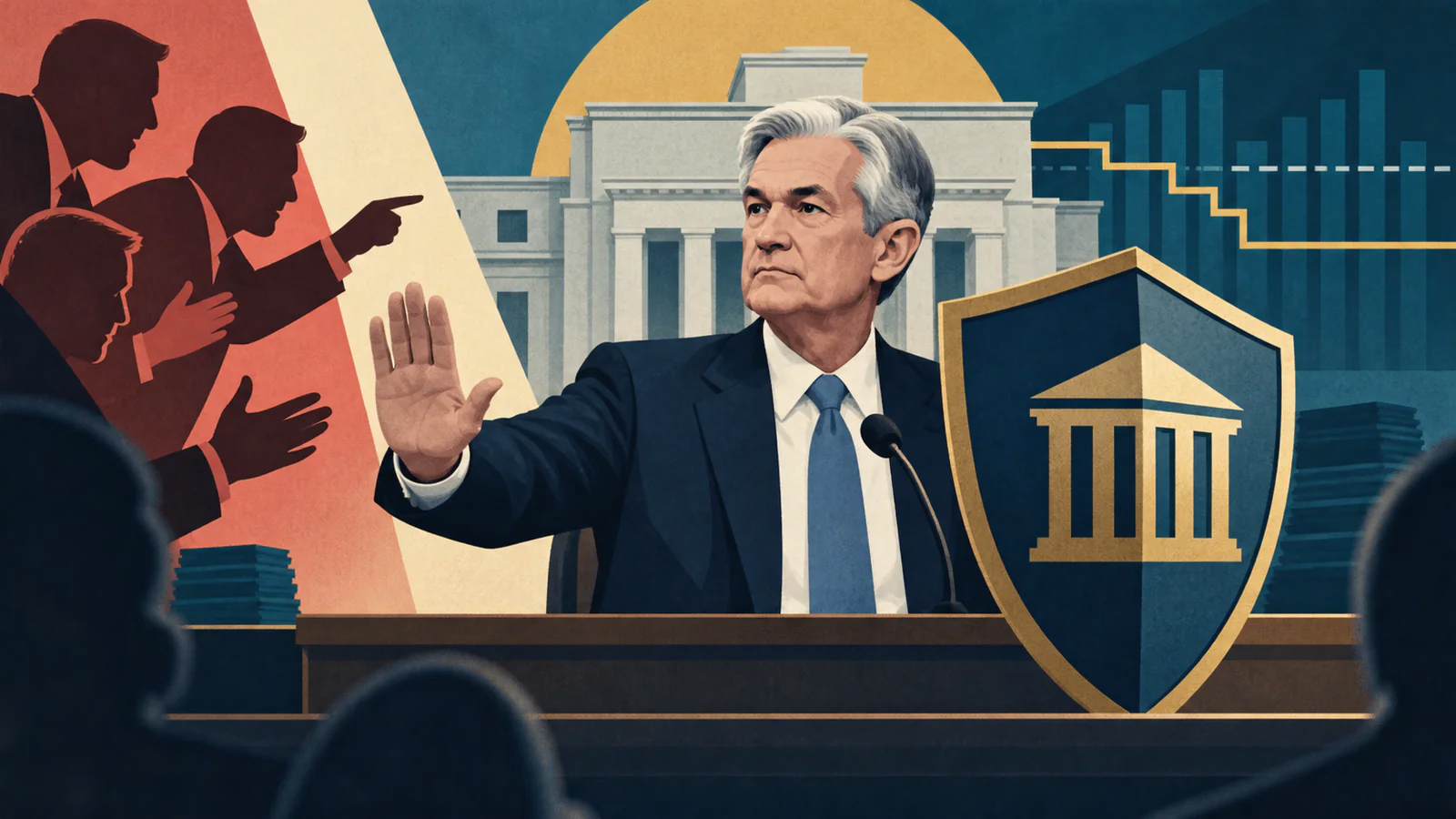
Federal Reserve Chair Jerome Powell delivered a staunch defense of the central bank's institutional autonomy before the Senate Banking Committee, rebuffing executive political pressure for rapid interest rate cuts and affirming that policy decisions must remain strictly insulated from election cycles.
Further reading and standardsWASHINGTON — Standing firm against mounting public criticism from the executive branch and political demands for rapid monetary easing, Federal Reserve Chair Jerome Powell delivered a resolute defense of the central bank's statutory independence on Thursday. Testifying before the Senate Banking Committee following the FOMC's decision to hold benchmark interest rates in restrictive territory, Powell declared that insular monetary policy — insulated from short-term electoral considerations — is the essential foundation for long-term price stability, low unemployment, and global confidence in the U.S. dollar.
What Happened: Powell Rebuffs Political Demands for Rapid Rate Cuts
The high-stakes congressional hearing followed repeated public statements from the White House calling on the central bank to slash interest rates to stimulate manufacturing and lower mortgage borrowing costs.
Powell pushed back firmly, asserting that setting interest rates based on political expediency rather than empirical economic data has historically led to disastrous stagflation, citing the monetary mistakes of the 1970s. Powell reiterated that the Federal Reserve's governing charter was deliberately established by Congress to operate free from executive branch direction, ensuring that the central bank can implement unpopular but necessary restrictive measures to extinguish inflation.
"History shows clearly that when central banks are subordinated to short-term political pressures, inflation becomes unanchored and everyday families suffer the greatest economic harm," Powell testified. "Our institutional mandate is clear: we serve the American public by pursuing maximum employment and price stability, without regard to political calendars."
Economic Balancing Act: Defending Restrictive Rates Amid Mixed Signals
Powell detailed the complex empirical crosscurrents confronting the Federal Open Market Committee:
- Labor Market Strength: Job creation remains remarkably sturdy, with prime-age labor participation near multi-decade highs, proving that restrictive borrowing costs have not triggered a recession.
- Sticky Housing and Rent Costs: While goods inflation has cooled to pre-pandemic baselines, shelter costs and consumer service prices continue to rise faster than the Fed's 2% target.
- Fiscal Deficit Pressure: Mounting federal debt issuance of over $2 trillion annually continues injecting fiscal stimulus into the economy, complicating the central bank's effort to cool overall aggregate demand.
Why It Matters: Institutional Integrity and the U.S. Dollar's Reserve Status
Institutional economists and sovereign wealth managers view Fed independence not as an esoteric legal technicality, but as the cornerstone of global financial stability:
International foreign exchange traders and foreign central banks hold more than $8 trillion in U.S. Treasury securities primarily because they trust that the Federal Reserve will defend the purchasing power of the dollar. Any perception that the White House can dictate interest rate cuts threatens to spark a dangerous sell-off in sovereign debt markets and trigger currency devaluation.
What to Watch Next: The Succession Countdown and Senate Oversight
As Powell approaches the final stretch of his term as Federal Reserve Chair, political maneuvering over the central bank's leadership is intensifying:
Senate lawmakers are closely evaluating prospective nominees for upcoming governor vacancies, with fiscal hawks pledging to block any candidate who demonstrates political subservience. Powell affirmed that he will serve out the entirety of his four-year leadership term, concluding: "Our focus remains 100% on fulfilling the mandate Congress gave us."
Further reading
Use these official collections to explore the subject and confirm time-sensitive figures against the dated record.